Four from Londer to Ponder
Under the big, bold sun of California wine, what’s hot and what’s not can turn over like an oft-rototilled yard of weeds. Whether celebrating pure quality or not, taste-makers constantly shape the “it list” of winemakers, wineries and regions and, whether they admit to it or not, most producers wouldn’t turn away a turn atop the steaming pile.
Of the factors shaping consumer perception, few could argue that appearing on the cover of Wine Spectator is anything but a hyper-boost to a winery’s marketability. Whether such accolades tote merit or malarkey – well, we leave that for you to decide.
The Q Rating of Anderson Valley, a compact coastal region north of San Francisco, has been on the rise, and one of its celebrated stars, Londer Vineyards, has received high marks including so-called classic scores (95 points or up on a 100-point scale) from the Spectator in recent times, including front cover billing.
Relative newcomers to the wine trade, Larry and Shirlee Londer began production of their celebrated Pinot Noir bottlings with the 2001 vintage and their magic carpet ride zipped off from there, earning them heavy pets and lofty praise from wine critics.
Their comet burned brightly and quickly. In 2011, the Londers sold their vineyards and, in May of this year, it was announced that the brand would cease operations.
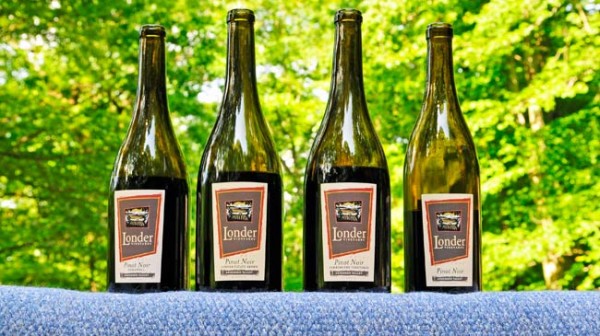
Pennsylvanians should care about this news because the PLCB saw headlines out of California and took action, swooping in to buy four lines of Londer’s 2011 releases. These volume savings are now available statewide via the agency’s Chairman’s Selection program.
Then, of course, the question: Of which Londer to be fonder? Well, friends, we sat down for a blind tasting with all four bottles. At no cost to you, here are our recommendations and insights. Wines are listed in the order in which we drank them (which was unknown to us at the time).
Londer Anderson Valley Pinot Noir 2011 ($15.99)
Jeff: A straightforward, appealing Pinot that got off to a good start with its beautiful and fresh nose. Pretty ruby red in the glass that forecasts a very appealing blend of cherry and spice, with a small dose of creaminess. That’s the wood at work. This is great candied fruit. Not one to overthink but, at the same time, there is some complexity, like the tartness on the slightly drying finish. Nice acidity on the mid-palate, too.
Mike: This wine is straight up delicious, though probably the least complex of the bunch. Still, it’s $3 less than the others, and a wine to buy and enjoy right now… on your patio.
89-91
Londer Paraboll Pinot Noir 2011 ($18.99)
Jeff: A touch darker and stinkier, not as flush with sweet fruit up front. I found the Paraboll less expressive; the finish drops right off. It’s tannic and a touch austere, probably better suited as a food wine. By no means a subpar wine but its earthy, more aggressive style is a striking contrast to the fruit of the Anderson Valley bottling.
Mike: I drank this with dinner after our tasting, but it remained my least favorite of the bunch. It just isn’t what I look for in a Pinot – all dark fruits and dour personality. The watery mid-palate didn’t help either. Very interesting that we both agreed this had the least appeal of the bunch, yet the label indicates that the Paraboll bottling is reserved for “classic” and “rare” versions of Londer wine.
87-89
Londer Ferrington Pinot Noir 2011 ($18.99)
Jeff: At first, a “typical” Cali PN aroma of focused, intense fruit, then I picked up some caramel notes as the wine took on more air. Concentrated on the palate, moderately tannic and a good finish. This was my favorite of the tasting. It has a luxurious mouthfeel and, although there’s plenty of dark fruit within, it’s subtler and more layered than the Anderson Valley. An intriguing, fairly gorgeous Pinot.
Mike: In contrast to the Paraboll, the Ferrington – which sources grapes from the same vineyard – was bright and cheery, yet also had outstanding complexity. I enjoyed the use of oak to bring out warm spices and toffee notes, but felt that the cherry fruit still shone through. Outstanding now and will likely age well for a few years.
91-93
Londer Estate Grown Pinot Noir 2011 ($18.99)
Jeff: Probably the darkest hued of the pack, I took less fruit and more spice upon first sniff. The tannins expand like a sponge in the mouth. While more like the Paraboll in that it calls for food, this is a more complex and satisfying wine. I could see it puckering up to a big, fat piece of king salmon. A wine to age a year or two to coax out more potential.
Mike: This certainly had more in common with the Paraboll in terms of dark, brooding flavor elements, but it also showed more complexity and – let’s face it – power. Definitely the one to age.
90-92
To put a bottom line on it would look something like this:
For an easy drinking Pinot right now – meaning warm nights on the patio, grilled chicken, salmon and pork tenderloin – the Anderson Valley bottling, a relative bargain at $15.99, is sure to please.
The Ferrington, on the other hand, feels more like autumn, with its warm spices and richer, deeper flavors. It’s drinking extremely well now, but warrants more complex flavors that the meals of September and October often bring. Think roasted chicken with Ras el Hanout. Oh yeah.
If you’re in it for the long haul, the Estate Grown hints at rewarding patient drinkers with the secondary complexity that can arise from the depths of a brooding and restrained initial presence. If you must drink it now, be sure to air it out a while before indulging.
As for the Paraboll, despite the label’s promise of rare and classic, we both found it to be the least appealing of the bunch, even on day two. Though it has potential to improve with a few years on its side, our overall impression – alongside the fact that it’s already the scarcest Londer bottling in PA – suggests that buying efforts are best spent looking out for the other three.