Alsace, All Summer
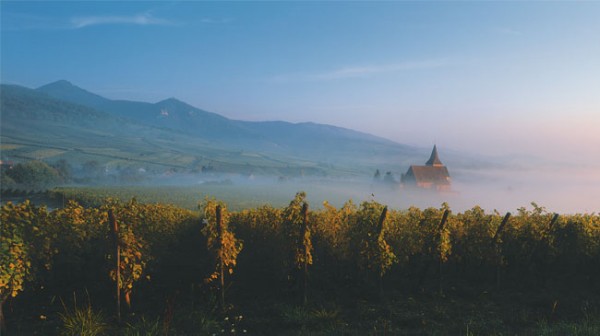
The match between summertime and aromatic whites is hard to top. Such wines are the source of great passion amongst the loyal (see Riesling, Summer of) and the purest, time-tested examples are sourced from Germany and the French region of Alsace. For centuries, these neighboring geographies have produced category-defining Rieslings, Gewurztraminers and Pinot Gris (what’s the Anglicized plural form of Gris, anyway?), as well as fine sparklers and other lesser-known varieties. All of this is due, in large part, to incomparable growing conditions and sure-handed techniques, hard-won over the ages.
Alsace’s makeup is dependable for vinicultural output. A cooler, high-elevation region pinned between the Vosges mountain range and Germany, it benefits from the topography’s protective embrace that staves off rain and harsher elements. Consequently, the growing season is remarkably dry and sun-drenched, an excellent step-off for raising wine grapes. The well-drained ground, too, plays a central role, and Alsace boasts more than a dozen soil types that tend to be chockablock with rocky and mineral-rich properties.
The resulting fruit bears a balance of ripe, solar-induced flavors and a firm backbone of minerality – reflecting the telltale terroir borne of singularly blessed soils – that makes for a food-friendly white that can drink well as an aperitif, too.
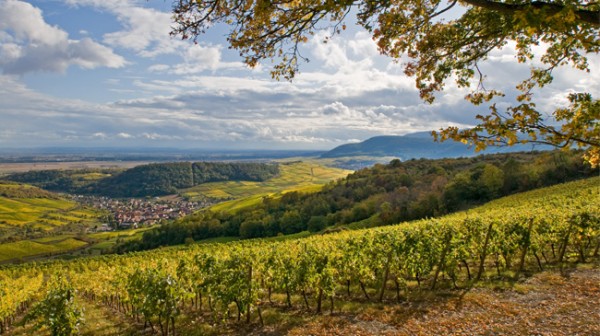
The types of cooler climate vinifera grapes well-suited for Alsace and Germany – like those mentioned above – are character-driven and distinct vehicles for spice and complex floral-fruity flavors; good in the moment and often ready to age thanks to high acid counts.
Because many of us aren’t yet ready to relent to the approaching fall season and, parenthetically, the Summer of Riesling extends well into September, we’ll size up a couple Alsatian offerings to consider before the rush of back to school, the World Series and altered foliage. A sampling was provided by the folks representing Wines of Alsace, allowing me to share these notes with our PAVC readers. Let’s drink on.
Domaine Laurence et Philippe Greiner Riesling 2010 This is characteristic Alsatian Riesling – stony-lean and spicy with bright, lemony zest, salinity and a sharp, acid-hewn finish. Aside from its upfront qualities, the Greiner is slightly more golden than its contemporaries and there are hints that promise a future state of richness that a few years of cellar age should deliver. A vibrant drinker that pairs perfectly with spice-rubbed sea bass. Available through the PLCB for $18.99.
E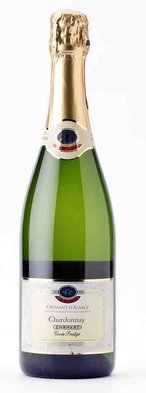 hrhart Chardonnay Crémant d’Alsace Cuvée Prestige NV A crowd pleasing, non-Champagne sparkler at a terrific price in PA. The delicious factor is definitely in play as this creamy and flavorful wine unwinds in the glass, showing off its toasty, citrusy notes. Focused and taut with a lengthy finish, it’s lovely at less-than-cold temps, too. A no-brainer bubbly to stock for the months (and holidays) ahead.
Kuentz-Bas Riesling Tradition 2011 Not yet in stores (the 2010 is now available for $15.99), the Kuentz-Bas is fragrant and tremendously satisfying. Mostly dry with whiffs of tropical fruit, peach, citrus and petrol, sharply acidic and packed with minerals, it’s the true article – a beacon of Alsatian craft and terroir. Imported by Kermit Lynch Wines, generally an imprimatur of high quality and value.
Willm Riesling Reserve 2011 Grapefruit-lemony and lean. The most steely of the bunch with some backend complexity that creeps onto the palate in the form of toasty, creamy je ne sais quoi – almost akin to what you find in the Crémant. I swear I get a whiff of sea air on the nose, too. Similar to the Kuentz-Bas, the 2010 rendition is now available in Pennsylvania, at $14.99.