Drinking in the Fork
This is the second installment of our three-part North Fork Long Island wine country opus. Read part one here.
The four-hour trek from Philadelphia behind me, it was time for wine. Sitting in a tasting room of Lenz Winery, at a homey wood table lovingly cluttered with serving boards of cheese and bread, glassware and corks, I listened intently to my hosts trace the history of North Fork wine. Founded in 1978, Lenz was a trailblazer in Suffolk County and today it boasts some of the area’s older vines.
“Something you used to hear about Long Island wines was ‘Oh, they smell like potatoes,’” said Dorothy-Dean Thomas of Lenz, referring to the telltale characteristics of the local soil, like elevated aluminum levels, that fueled such comparisons.
The region has come a long way since its backwater, tuber-rich beginnings. The dirt remains under the farmers’ fingernails but new levels of nuance and expression now inform the output.
Strolling the grounds of her Old Field winery, Ros Baiz noted the necessity of the North Fork’s evolution. “The price of the land is going to go up and so growing potatoes – that are going to make you about $3,000 an acre – isn’t going to work,” she said.
Undeniably appealing for its beauty, beaches and bounty, the North Fork will continue to be buoyed by urban escapism and a thirst for quality wine with local roots. Also, the infinitely troubling specter of climate change is an oddly promising portent of warmer growing seasons that would render added ripeness and broader market appeal for Long Island wines. Despite the disquieting backdrop, there’s a promising destiny sewn in those soils.
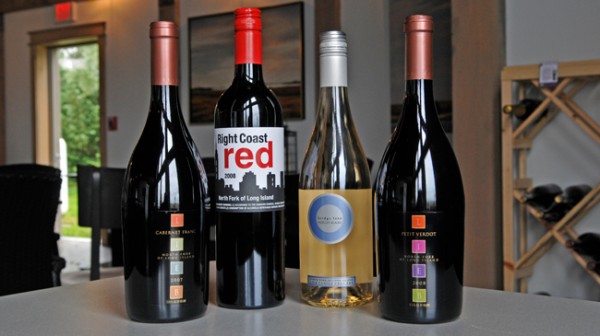
Current visitors will find wines predominantly defined by balance and complexity at the center. The reds are subtle and whites are intense, focused. “It’s not like a Mae West wine,” said Greg Gove of Peconic Bay Winery as he heralded the low alcohol, high acidity and food-friendly efforts of his North Fork contemporaries. “The barrel-fermented Chardonnay is in the barrel four months – maybe. A lot of lees stirring,” he added. Unlike California, he cautioned, the sugars of Long Island reds are low. “Makes Cabernet Sauvignon a hard sell.”
Lack of Cab shouldn’t discourage a soul from booking a weekend or week-long stay in the East End because, as the common refrain goes, good producers adapt. “There are a lot of talented winemakers here,” cited John Roselli of Mattebella Vineyards in what could have amounted to a hollow boast, but then came the kicker: “This is a region where any mistakes you make are going to show. You’re not going to be bailed out by high alcohol levels or intensely extracted fruit.”
A similar case was made in the tasting room of Shinn Vineyards in Mattituck. David Page, co-owner and -founder along with his wife, Barbara Shinn, is a former chef with a calming voice and a philosophical slant. On the October day we met, he cast a glance out at the overcast skies and the red grapes still on the vine. “The sugars are slightly lower than what we think we need,” he said. “That’s why we’re hanging the fruit (longer), so we get a little bit of dehydration.” In Page’s words, adept growers act as “translators of nature,” increasingly drawing on holistic, sustainable farming techniques. It’s not at the same level as biodynamic farming but it’s “a really, really great step in the right direction,” he said. Based on the wines I sampled at Shinn, it also springs damned fine juice.
The wines of the North Fork aren’t easily defined, insisted Mattebella’s Roselli. “It doesn’t settle in one place. In fact, the number of different styles is expanding not contracting,” he said, noting the vital influence of the newer generation of winemakers. “The improvement is going to keep coming,” he assured me. “You can’t just coast on what you did.”
Anthony Nappa is one of the young talents making a name in the region. Formerly at Shinn and recently named winemaker for Raphael, Nappa and his wife Sarah operate the salon-like Winemaker Studio, located on a quiet side road in Peconic. It functions as a cooperative, allowing winemakers to step out of their winery day jobs to focus on their own creations. “It’s interesting to see the wines that they make for themselves compared to the wines they make for someone else,” said Sarah. She credits the larger producers for attracting the masses, allowing visibility for boutique efforts. “We need the big guys as well as the little guys,” she said, adding, “It’s a lot more about keeping friends.”
Getting to North Fork wines and wineries: The North Fork is easily navigated by car via the two main routes that stretch along the length of the peninsula. During our visit, I focused on the real estate east of Jamesport – the towns of Mattituck, Cutchogue, Peconic and Southold. Route 25 (Main Road) and County Road 48 (North Road or Middle Road) run parallel to each other, 25 being the more heavily travelled on the southern side of the fork.
Traffic can be a challenge on weekends so it helps to keep a “reverse commute” strategy in mind when visiting wineries. The majority of visitors approach the North Fork from points west and work their way eastward, winery to winery. To avoid tie-ups and overcrowding, it can help to start the day at a further-out destination and work back toward the mainland.
In the final installment, I get more in-depth with the wines and share a few dozen tasting notes.