On Wine, On Point
The next installment in our periodic series on standout wine writing.
Recently, a friend who wants to get more serious about wine asked me for reading suggestions. He wanted to become more conversant in the fleeting notes many long to master: The ability to call out spice box, pencil lead, peat, garrigue, et cetera in the glass. I stopped him there. Wine appreciation – and writing dedicated to the topic – doesn’t align that way, I explained. That’s something developed over time – or not. Anyway, it’s not what really matters. For my money, good writing transcends topic. Unbound from technical jargon or insider minutiae, wine prose should stimulate the curiosity rather than mount peer pressure to develop hyper-synapsed flavor descriptors.
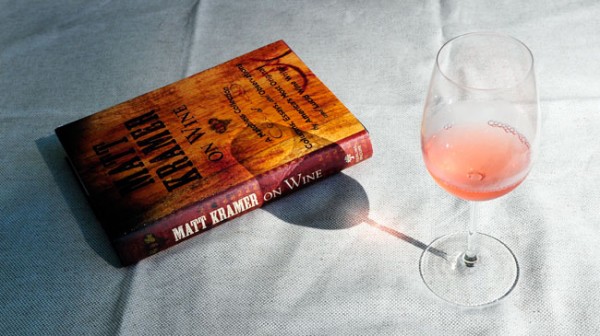
This road to higher ground inevitably leads me to Matt Kramer, he of The Oregonian, New York Sun, Wine Spectator and several celebrated books. Kramer’s excellent On Wine is a series of shorter essays that wrangle humility and wit to level the big picture of “wine thinking.” Forget the mumbo jumbo and evanescent tasting notes. Kramer’s is a holistic grasp that compels the reader toward exploration of “truer” wine and winemaking.
He admits his own missteps – like when he dubbed Syrah as the Next Big Thing out of California – and maintains a genuine tone where some of his peers, seduced by the trade, dabble in idol worship and star, um, fracking. He’s impressively adept at analogies, too. In one instance, he compares the modest regional reach of a wine to limiting the reach of New Jersey tomatoes to Philadelphia and Providence. Undeniably, there’s ego within the pages but few, if any, can deny his easy handling of the broad landscape which, parenthetically, is in keenest display through his contemplation of Burgundy, the subject Mr. Kramer is most renowned for (see his tome Making Sense of Burgundy). This is acutely evident in his essay on why terroir matters, in which he alternately refers to this most essential and mysterious quality as the “’more beautiful question’ of wine.” He continues: “Happily the more beautiful question is being asked with renewed urgency by both growers and drinkers. A new care is being exercised. After all, without terroir – why Burgundy?”
Don’t doubt Kramer’s finesse with any point on the map. Having amassed a bulging resume spanning decades, he moves in all sectors, examining – and typically dispelling – a diaspora of trends. During an essay called “The Fear of Austere” – or the overemphasis on fat, fruity wine émigrés hailing from California, Bordeaux and beyond – he opines: “If we can eat our words, we can drink them, too. A large glass of austere might be just right for what ails some wines today.”
Wine lovers who welcome principle amidst the pages will find purchase in Kramer’s ideas. The book is topped by a sprawling essay on Angelo Gaja, the veteran Piedmontese producer of legendary repute, originally penned for (and rejected by Tina Brown of) the New Yorker. For this alone, if not for the numerous, squarely intelligent chapters, On Wine is a gift.