Southern Composure
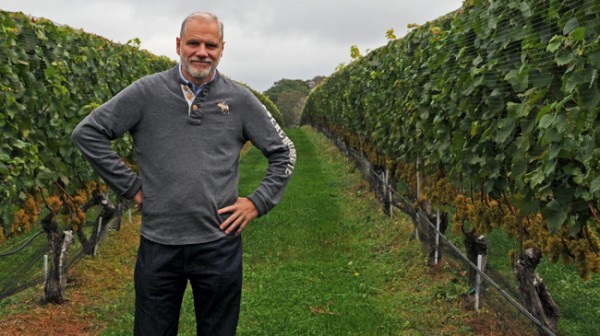
The radiant grapes presented their full and fleshy selves from immaculate vines. Proudly perky as if tended to by a Beverly Hills surgeon, it was the best looking fruit imaginable, and it was right at home on an October day in Southampton, New York.
During vacation with my family on Long Island’s North Fork, of which I’ve become an unabashed booster, I ventured southward across Shelter Island, the chilly sound waters and the cloistered wealth and celebrity of the Hamptons. I rolled on to the village of Sagaponack, home to famous authors, actors and Clintons, as well as Wolffer Estate, one of New York’s – make that the Eastern seaboard’s – elite wineries.
Wolffer’s geometrically precise plantings punctuate the landscape, a departure from the pattern seen from the car window: Farm-plot-and-woods, farm-plot-and-woods and the occasional mansion. Formerly the site of a potato farm, a parcel of the land was carved out as a vineyard and winery in the Eighties – 55 acres of grapes enveloped by expansive equine grounds.
Following arrival, as I made small talk with the staff, winemaker Roman Roth strode across the lofty, echoing tasting room, tall and alert if not wearied by the long growing season. Having just excused himself from a run-on staff meeting, it was to the grapes, among rows of pristine Chardonnay, where he first explained the painstaking labor of maintaining Wolffer’s vines, the meticulous pruning and hand-picking of fruit.
Roth spoke in a gentle German accent and was quick to praise the fine work of the vineyard team and the estate’s physical attributes. Beyond human factors like sweat and TLC, there are key differences between the forks of Long Island. On the spectacularly upmarket southern side, realm of the Hamptons, real estate pressure has driven viticulture out for the most part, making Wolffer a rarity in the neighborhood. By comparison, the remote and rural tendencies of the North Fork allow for turf farms and a modest wine trade in a post-potato economy.
The South Fork is cooler by about five degrees, too, said Roth. “But the point to me is, the time from mid-flowering to mid-maturity…we get wonderful hang time.” The cooler temperatures make for 110 growing days, on average, for Chardonnay. In Burgundy, Roth points out, about 100 days deliver great wines. “That’s the key to making even better wines, if you get this long hang time.”
Of course, the moderating effects of the surrounding waters make a major difference. There’s no winter damage, no spring frosts. “In fall, it’s the last area to get frost in New York State,” Roth said of his vineyard. “As long as you don’t get a frost you can let grapes hang. And we try very hard to get the most out of it.”
The extended time on the vine coaxes more minerals into the grapes and makes for complex, intense wines. “This slow and steady ripening curve that we have makes us very unique,” he confirmed. The cooler clime also renders beautiful acids within the fruit. “To me, maybe because I’m German, I like to celebrate this acidity.”
Such favorable conditions, perhaps the envy of the northern coastal states, prevents what Roth refers to as airline wine, an “alcoholic, fruity thing” lacking character.
For the record, wine fans, the 2013 growing season was ideal on Long Island, the likes of which probably haven’t been seen heretofore in East End wine country. Several producers I encountered, possibly spooked by the thought of fully pronouncing it, stopped short of saying what they were thinking: It will be the region’s all-time vintage. Roth, for his part, partially went for it: “This has been a dream year, of course. Unbelievable.”
Though the fruits of the all-star vintage won’t be ready for a while, and if a trip to the Hamptons isn’t on your travel docket, it is possible to enjoy a few exceptional Wolffer offerings here in Pennsylvania. If your thing is drinking wine borne of optimal conditions (yes), masterful vineyard management (check) and skilled craftsmanship (checkmate), add some of these to your list.
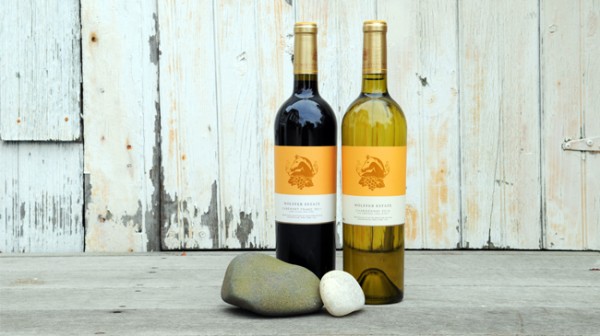
Cabernet Franc 2011
This wine will turn you on. Light on its feet with tart, red-blue fruit flavors and pinpoint acidity. Impeccably trussed by upright tannins and complimented by an excellent, drawn-out finish. A sprightly, vivacious middleweight that will likely age well. 13% alcohol. Currently, the PLCB carries the 2010 vintage for $22.99, available through special order with a minimum quantity of 12. Code 528247.
Chardonnay 2010
Subtly tasty nose. Rich and full-bodied yet nuanced, accented by finer touches of mineral form and acidity. A flare of fruit and modicum of toasty oak delivers lift to the mid palate. Haunting holdover of fruit on the finish. On the drier side of Chard, food-ready. Outstanding, European-style white with impressive focus. $17.99, available through special order with a minimum quantity of 12. Code 531172.
Classic White Table Wine 2012
A blend of Chard for body and mouth feel; Gewurztraminer and Riesling (from Wagner Vineyards in the Finger Lakes) for punch. Clean, with an upfront sweetness that finishes on the drier side. Just a notion of fruit due to, surprisingly, zero grams of sugar. Crisp and pure. $15.99, available through special order with a minimum quantity of 12. Code 531644.
Merlot 2010
Blended with portion of Cab Franc. Lush, dark nose, good from first cork pull, and well structured. Fruit (blackberry, blueberry), earthiness and significant tannic bite on the finish. Plenty to play with, both for fruities and foodies. $18.99, available through special order with a minimum quantity of 12. Code 536544.
Other selections meriting a trip to Sagaponack:
Chardonnay Perle 2011
Very, very appealing. A toasty, warm Chard that does time in stainless steel as well as eight months of oak, with long lees contact. Complex, creamy, balanced by acid. Apple flavors. 10 years of aging? “No sweat for this wine,” says Roth.
Cabernet Franc Caya 2010
Smoky, ripe nose. Sharp on the palate. Complex, balanced, chewy construction, drying tannins. Remarkably long finish.
Fatalis Fatum 2010
A Bordeaux blend that brings rounded fruit and structure. A few years of rest will help subdue its massive tannins.